Tableau Architecture - Server
I am a full stack developer and I am always curious to explore and know things more. I like to learn new things and share my knowledge with the world through writing blogs.
Tableau server is an enterprise-level platform that allows users to publish, share and manage dashboards securely. It enables teams to collaborate on data insights in real-time while maintaining security, scalability and performance.
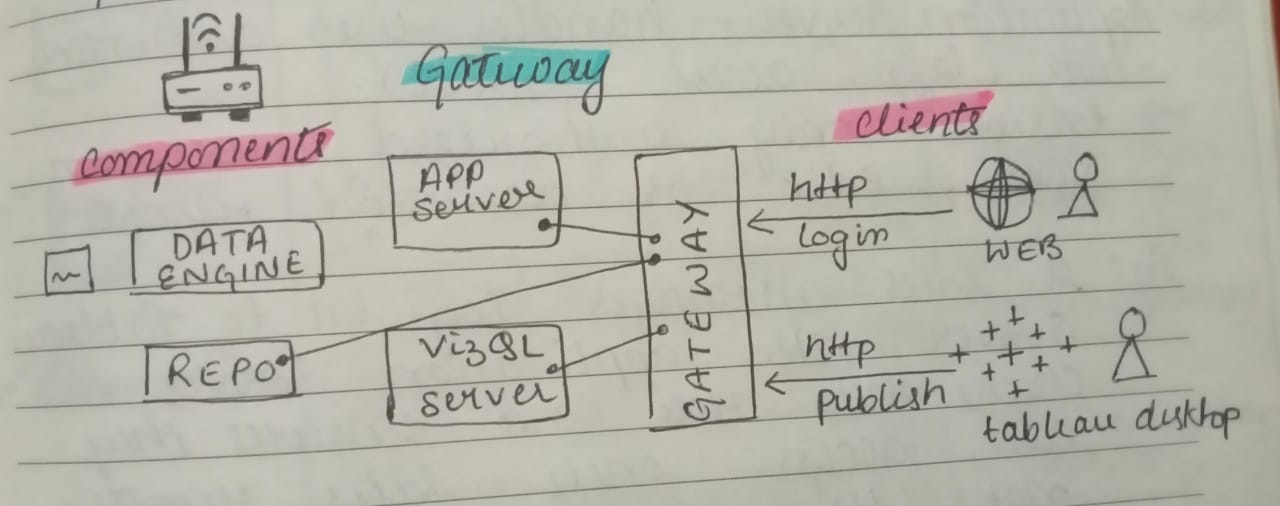
Fig: Tableau server
Layers
Data Layer
Tableau server connects to various data sources, just like tableau desktop.
Gateway
Gateway acts as an entry point for users accessing server. It distributes user requests to different components based on availability and load. Gateway ensures high performance by balancing workloads.
Application Server
It handles user authentication (Login, access control, etc.) . It ensures only authorized users can view, edit, or download reports.
For example, A sales manager logs into tableau server. The application server checks their role and ensures they can access only sales reports, not HR data.
VizQL server
VizQL stands for Visual Query Language. It converts raw data into visualizations by running queries behind the scenes. It translates user actions into database queries.
Data engine and repository
Tableau data engine (Hyper Engine)
It stores extracted data for fast analysis.
It optimizes queries for large datasets.
It supports in-memory processing for high speed performance.
Tableau Repository ( Database for Meta-Data)
It stores user roles, permissions, and data sources.
It tracks server performance and usage statistics.
It uses PostgreSQL as its internal database.
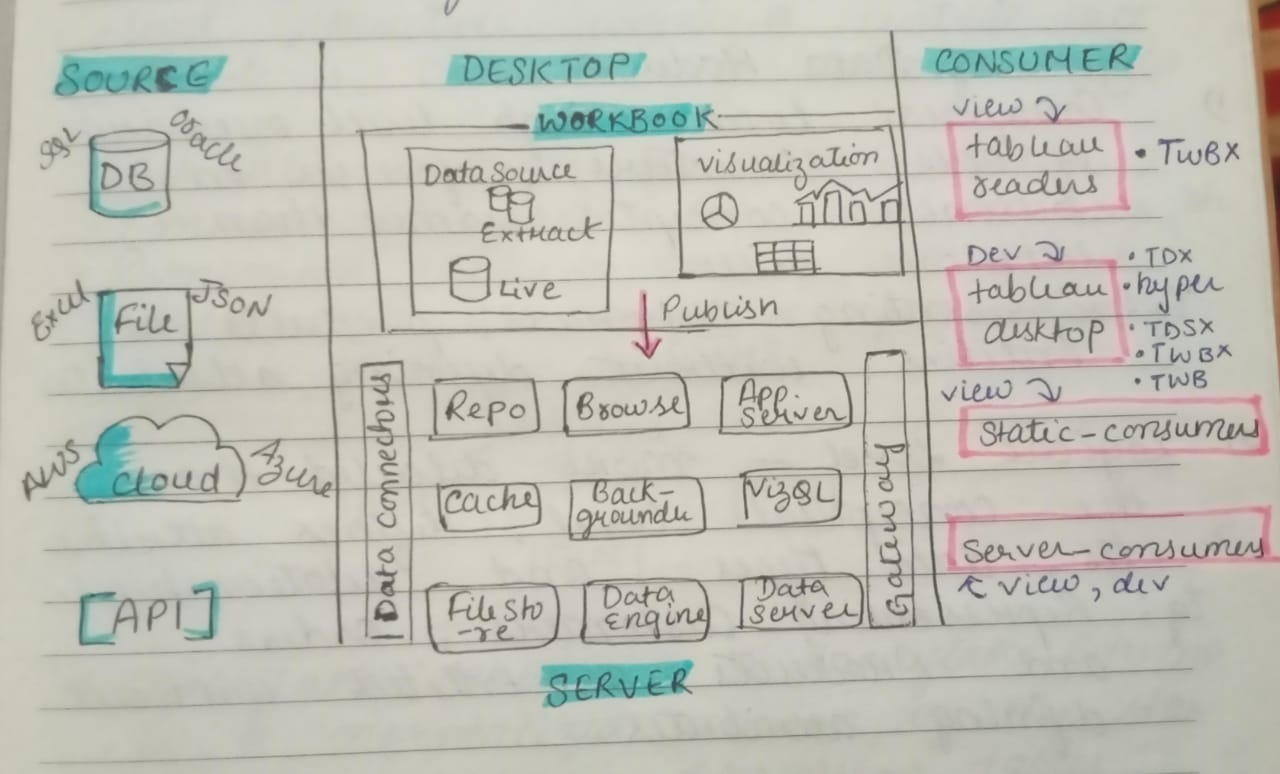
Fig: Big-picture of tableau server
Tableau Server Workflow
User logs in to Tableau Server.
Gateway forwards request to the right component.
Application Server verifies authentication.
VizQL Server processes the data request.
Data engine retrieves data from the repository.
Tableau server sends the final dashboard to the user.